Platform One, No Ticket Required: Inside Britain's Station Gigs
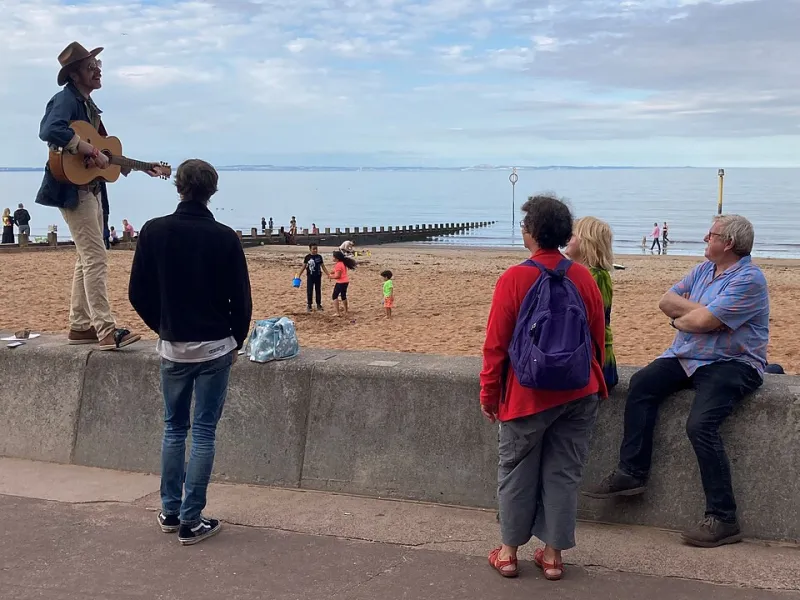
Photo: Gweduni, CC BY-SA 4.0, via Wikimedia Commons
The first thing you notice isn't the music. It's the sound of about four hundred people trying to be somewhere else.
Then a guitar starts, somewhere near the ticket barriers, and something odd happens to the room. The announcements keep going. The escalators keep moving. But the crowd slows. People who were doing the commuter half-jog — that specific gait, shoulders forward, phone out — start walking at the pace of people listening to something. Which they are.
The most democratic room in the country
Station gigs aren't new. The public pianos have been there for years, and the unofficial busking economy is as old as the railways that host it. What has changed is the deliberate stuff: programmed sets, planned slots, acts booked on purpose for the 17:00 to 19:00 crush. Choirs at Christmas, which we all expected. But also jazz trios on a Tuesday lunchtime in Leeds, acoustic duets under the clock at Glasgow Central, and a run of DJ sets at Manchester Piccadilly that turn the concourse into something closer to a very well-lit basement.
What makes it remarkable isn't the quality — although it's often very good — it's the terms. There is no ticket. There is no guest list. There's no support act you have to sit through and no headline you have to stay for. Nobody is filming the whole set on a phone held above their head, because most of them are standing there with a coffee and a bag for life, killing nine minutes before a platform is announced.
That accidental audience is the point. A gig with no door policy is a gig where the front row is whoever happened to be walking past.
Why stations said yes
Ask the people who run these programmes and you get a surprisingly unromantic answer first: dwell time. A station is a place people want to move through, not linger in. Anything that makes a concourse feel less like a corridor — that makes a person stop, look up, buy a second coffee — is quietly welcome.
But the second answer is warmer. Station staff see the same thousands of faces every week, and a good chunk of those faces are having a bad day. Trains are late. Interviews are being raced to. Someone is going to see a grandparent for what might be the last time. A woman who manages community programming at a Midlands station puts it like this: "You can't fix the timetable. You can absolutely fix the mood on the concourse while they wait for it."
The artists who say yes
For a musician, a station is a strange offer. No green room. No soundcheck worth the name. An acoustic environment somewhere between a swimming pool and a cathedral, with the added challenge of a tannoy that will absolutely interrupt you mid-verse.
And yet they keep signing up. Partly it's the exposure — three thousand people a day is more footfall than most small venues see in a month. Partly it's that stations are a genuine leveller. A teenage singer-songwriter with two songs and a chord she's still learning shares the same concourse as a session player who's been touring for fifteen years, and the crowd gives them both the same amount of attention, which is: some, if they've stopped.
"Nobody has paid to see you, so nobody owes you anything," one performer in Bristol tells me, adjusting a guitar case. "It's the most honest audience I've played to. If they stay, it's because you're actually good."
The unwritten rules of the platform gig
There's an etiquette to this that nobody wrote down, so here it is:
- Stay if you like it, walk if you don't. Nobody's checking. That's the freedom of it.
- Don't block the barriers. This is the one true law. Every station programme lives or dies on the goodwill of people who need to get to work.
- Tip if you can, but not like that. Coins at the feet of a programmed act can feel a bit odd. Buy their record instead, or just nod.
- Leave when your platform's called. This isn't disrespectful. It's the format. It's also, if we're honest, a much better way to consume live music than standing through forty minutes of someone else's support slot out of politeness.
The eleven-minute crowd
The thing about a station gig is that it can't be captured. There's no recording that gets the tannoy interruption, the rumble coming up through the floor, the way the whole hall reorganises itself when the 7:42 finally gets a platform number and two hundred people peel away mid-chorus.
That's not a flaw. It's the whole point. Britain has spent a decade making live music more expensive, more ticketed, more planned. Stations have accidentally built the opposite: a scene you can't book, can't resell, and can't even reliably find twice. You just have to be passing through at the right time, with nowhere better to be for the next eleven minutes.
Which, on a Thursday evening in November, is most of us.