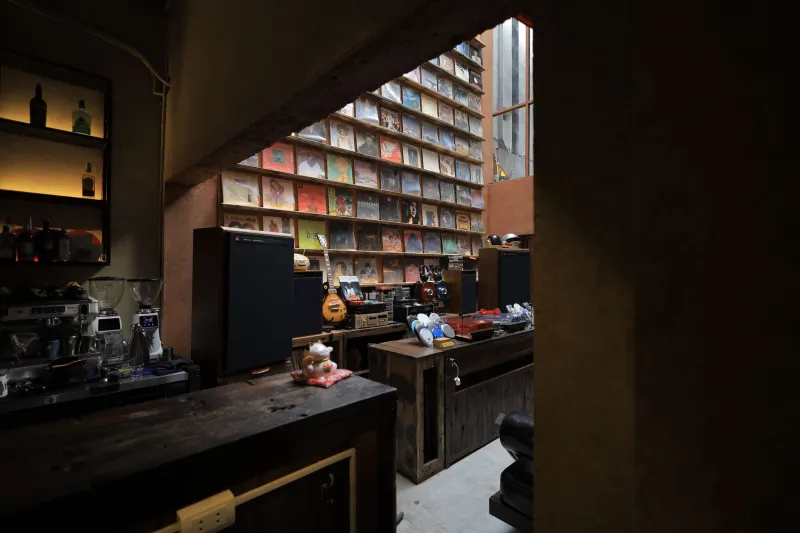
No Small Talk Required: Inside Britain's Quietest Big Night Out

Photo: Shixart1985, CC BY 2.0, via Wikimedia Commons
There's a particular sound a pub makes when forty people stop talking at once, and it isn't really silence — it's the rustle of forty paperbacks being opened. It happens on the second Thursday of the month in a back room in Leeds, and it is, genuinely, one of the better nights out in the city right now.
Welcome to the silent book club: part reading group, part social club, entirely free of the bit where someone asks what you do for a living.
The premise, for the uninitiated
The format is almost insultingly simple. You turn up with whatever you're reading — a 700-page history of the Byzantine Empire, a romance with a cartoon cover, a manual for a boiler you no longer own — and you read it, in company, for an hour. Then, if you fancy it, you talk about books for another hour. Or you don't, and you go home.
There's no set text. Nobody has prepared discussion questions. No one will ask whether you finished chapter nine, and no one will look at you with quiet pity when you admit you're still on page twelve.
First-timers tend to arrive braced for awkwardness. What they find instead is closer to a library with a licence to gossip afterwards. Groups have cropped up in taprooms in Manchester, gallery cafes in Glasgow, church halls in Norwich and, inevitably, a handful of railway-adjacent pubs where the 19:04 to somewhere rattles past mid-sentence.
Why it works when so much else doesn't
Three things, roughly.
It's cheap. A pint is optional. A book is free if you've got a library card and a conscience. Set that against the average big night out in 2026 and the maths does itself. For anyone who has quietly retired from £14 cocktails and 1am taxi surcharges, an evening that costs the price of a lime and soda — or nothing at all — isn't a compromise. It's an upgrade.
It's low-stakes socially. The pressure valve of having something to do with your hands cannot be overstated. Reading in public gives you a legitimate reason to look down, which means you can be in a room full of strangers without performing for them. Conversation afterwards tends to be better than the usual small talk, because everyone already has a subject.
It's shared attention. This is the quiet magic trick. There's a distinct, slightly buzzy feeling that comes from sitting in a room where everyone is concentrating on something different and nobody's phone is face-up on the table. It's the opposite of scrolling in company, and it turns out people quite like it.
And then there's the mix. A typical room runs from students to people in their sixties, with a solid core of thirty-somethings who've decided their social life needs less shouting in it. Nobody checks. Nobody asks for credentials. The only entry requirement is a book and a willingness to sit still for forty minutes.
The house rules
Organisers converge on a similar short list, and it's worth knowing before you turn up.
- Bring a book, any book. Physical is nicer, e-readers are fine, audiobooks on headphones are tolerated with mild suspicion.
- Silence is the point. No catching up during the reading hour. Save it for later.
- Leaving early is allowed. Nobody will chase you down the street.
- The talking hour is optional. Half the room tends to stay and half drifts off into the night. Both are correct.
- Buy something if you're in a pub. A coffee counts. That's how the room stays free.
How to find one — or start your own
Search 'silent book club' plus your city and you'll usually find something within a mile or two. Most groups run on a mailing list or a very earnest social media account rather than a proper website, so check the usual places. Libraries are increasingly hosting their own versions, and plenty of indie bookshops run them after hours with the lights turned down and the good chairs out.
Starting one is even easier. Pick a pub with a back room and a landlord who seems amenable. Pick a night that isn't Friday. Set the times clearly — forty minutes reading, twenty minutes chatting is a well-tested ratio. Bring a sign, or don't. Two of you is a book club; four is a scene.
The only real requirement is that you actually read. That's the whole thing. A room, a book, a bit of company, and no obligation to be interesting about it.
Somewhere between a library and a lock-in — that's a decent way to spend a Thursday.