Dial C for Culture: Inside Britain’s Red Phone Box Renaissance
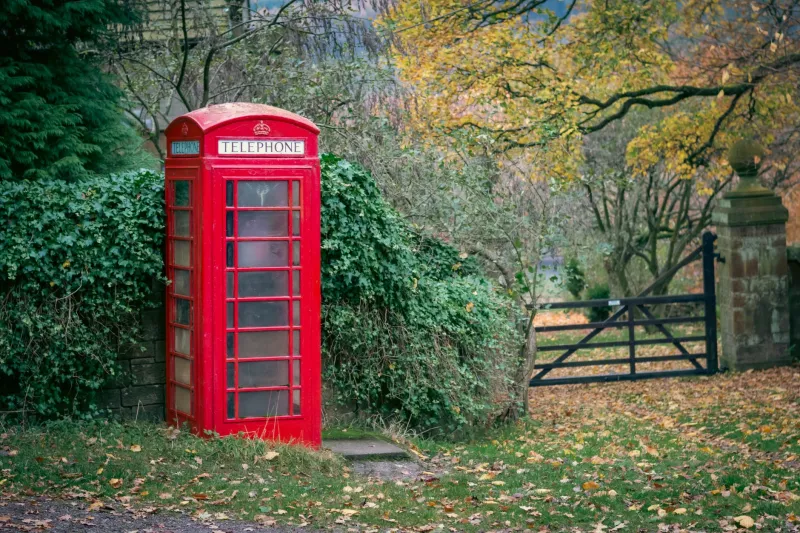
Britain has never been short of tiny stages. We have pub back rooms, church halls, the corner of a record shop and that weird upstairs room above a chippy. But in 2026, the most unlikely venue is also the most recognisable: the red phone box.
Once a symbol of urgent calls and loose change, the phone box has been quietly retrained. Walk through almost any market town and you’ll find one with a new job title. Some are book exchanges. Some are galleries. A few have hosted gigs so small the audience count is basically a fire regulation thought experiment.
The one-square-metre scene
Part of the appeal is practical. A phone box is already built, already on the high street, and already has a certain amount of local affection. It comes with a frame, a roof and a silhouette that does most of the marketing for you. For artists and volunteers, it is a venue with the hard work already done.
BT’s Adopt a Kiosk scheme has helped communities take on boxes for a nominal sum, and in 2026 it has become a quiet engine of hyperlocal programming. Parish councils, libraries, artists and ad hoc groups of neighbours are all getting involved. The results are uneven, which is part of the charm. Some boxes are immaculately curated. Some are held together with Blu Tack and optimism. Most are somewhere in between.
A tour of the smallest venues in Britain
In south Manchester, artist Jodie has turned a phone box into ‘One Wall’, a micro-gallery showing a single piece at a time. ‘The constraint is the point,’ she says. ‘You can’t hang a retrospective in there. You have to choose one thing and commit.’ Opening nights involve a folding chair, a flask and whoever happens to be walking past.
In Bristol, a box has been reborn as a one-night disco called Dial Tone. The handset is the guest list, the playlist is 45 minutes long, and the dance floor is the pavement. It is less a club night and more a collective shrug at the idea that culture needs a big room and a bigger bar.
Elsewhere, the programming gets even more specific. A box in rural Oxfordshire runs a monthly poetry drop, where a new poem is taped to the glass and passers-by can listen via a QR code. A box in Leeds has become a zine swap, with a tiny shelf and a laminated sign asking people to take one and leave one. On the east coast, a listening booth plays recordings of local sea shanties and shipyard stories, which is either deeply moving or deeply Scarborough depending on your mood.
Not every project is a hit. One volunteer in Sheffield tells me their box gallery was ‘basically a very damp cupboard with ideas above its station’. They fixed the leak, added a battery-powered light and now run a monthly ‘tiny opening’ with crisps. The crowd is small. The commitment is not.
Why the phone box works
Smallness is not a limitation here; it is a curatorial tool. A phone box forces you to edit. One artwork. One poem. One song. One idea. In an attention economy that rewards more, more, more, that feels almost radical. The box is a stage set. It signals that something is happening without a poster campaign or a press release.
It also lowers the stakes. Local creativity needs permission to be a bit scrappy, and a phone box gives it that permission. You don’t need a licence for a book swap. You need a rota. You don’t need a headline act for a listening booth. You need a speaker and a neighbour who knows how to use a drill.
And phone boxes are good at being looked at. They have a silhouette. They are red. They are, frankly, iconic. In a high street that has lost banks, department stores and plenty of its old certainties, a phone box with a programme is a small act of defiance. It says: this place is still being used, still being shaped, still worth a second glance.
The practical bit
Talk to volunteers and the same issues come up: condensation, lighting, insurance, keys and the question of who empties the bin. The romance is real, but so is the maintenance. Most projects are run by parish councils, libraries, artists or loose groups of neighbours. Funding often comes from local grants, crowdfunding or a whip-round. ‘We spent more on a dehumidifier than on the art,’ one organiser says.
Accessibility matters too. A box with a step and a heavy door is not open to everyone. The best projects think about reach: low shelves, clear labels, a seat nearby and opening hours that don’t rely on one person’s goodwill. The tiny venue only works if it is genuinely for the public, not just for the people who already know about it.
The future is small
As high streets continue to rethink themselves, the phone box offers a useful template: take one obsolete thing, give it a new job, let local people programme it. It won’t solve the crisis in arts funding. It won’t replace the venues we are losing. But it does something valuable. It makes culture visible at street level, in places where you might not think to look for it.
In 2026, the smallest venues in Britain might also be the most optimistic. They ask for very little and give back a surprising amount: a reason to stop, a reason to look and a reason to come back next month. Keep an eye out. The next time you pass a red phone box, don’t just take a photo. Check the noticeboard. You might have stumbled into the smallest cultural venue in the country.