Concrete Charisma: Britain's Dullest Buildings Are Quietly Becoming Local Celebrities
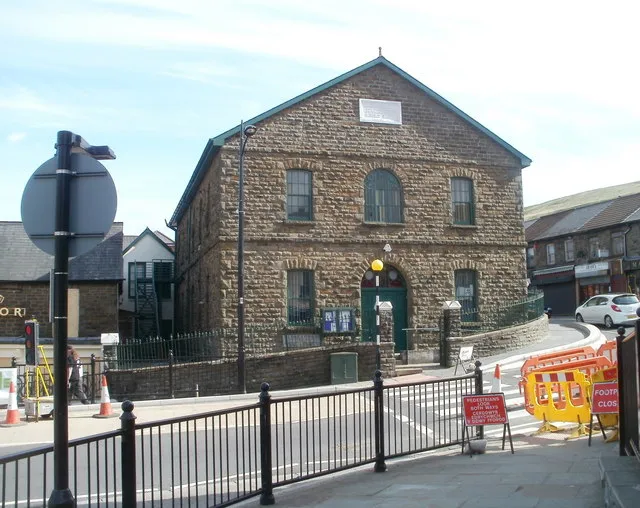
Photo: Philip Halling , CC BY-SA 2.0, via Wikimedia Commons
There is a particular kind of building that most of us walk past four times a day without ever really seeing. The slab of a car park with its arrow signage. The civic centre with a clock that hasn't been right since the council moved out. The bus garage that smells of diesel and ambition. For decades, the correct response to these places was a shrug. In 2026, the correct response appears to be a fan account.
Scroll for long enough and you'll find them: grainy photographs of retail-park lettering, spreadsheet-level catalogues of municipal handrails, walking tours with names like "Brent Cross, Slowly." A loose, cheerfully unorganised network of people — archivists, students, retired surveyors, full-time enthusiasts — has decided that the blandmark is worth defending. Not ironically, or at least not only ironically.
An apology for the unphotogenic
"Everyone wants the cathedral," says Priya, 29, who runs an account cataloguing post-war shopping centres and who asked me not to use her surname because her day job is in planning. "Nobody wants the multi-storey. But the multi-storey is where you actually park your nan's car when you go and buy her a birthday card. It's where the life is."
That argument runs through almost every conversation I have about this. The blandmark is not loved because it is beautiful, though occasionally it is. It's loved because it is used — heavily, unglamorously, by everyone. A civic centre doesn't filter its visitors. Neither does a bus station. In a decade of increasingly curated everything, there's something almost rebellious about a building with no ambitions beyond getting people in and out dry.
The people doing the documentation
The scene has no centre and no leader, which is roughly how everyone involved would like to keep it. What it does have is a shared method: photograph it now, because it might not be there next year.
Walk-and-log groups have formed in most major cities, often spun out of local architecture societies or simply out of a group chat. The format is simple — meet at a landmark, walk a route of deliberately unremarkable buildings, end in a Wetherspoons or a café that has definitely seen better decades, argue about brickwork. Attendees skew under 35, though not exclusively. Dress code: sensible shoes, because half the fun is getting into the car park on level five for the view.
Then there are the archivists, who operate more like librarians than influencers. They digitise council planning documents, date-stamp signage changes, and occasionally intervene when a building they like is quietly listed for demolition. Several told me their real fear isn't indifference — it's a sudden wave of affection arriving after the scaffolding goes up.
"You get the fondness when the place is already closed," one archivist in Leeds tells me. "That's the tragedy. We're trying to be fond in advance."
Why the under-35s are into it
There are a few theories doing the rounds, and they're not mutually exclusive.
The first is money. Nights out are expensive; a walk around a retail park with a flask is not. The blandmark attracts people who want to be out in the city without being sold something, and who have clocked that the most interesting thing in a town is often the thing nobody's bothered to brand.
The second is the studied rejection of the photogenic. If your entire social feed is built from warm-lit brunch and peachy sunsets, a picture of a 1970s library extension becomes a sort of palate cleanser. Ugly is a genre now. Bland is a flex.
The third — and the one I find most convincing — is that these buildings are a form of localisation. In a country where the high street has been stamped into near-identical shape from Penzance to Perth, the municipal car park with its odd little ramp is genuinely specific. It could only be here. It is a fingerprint.
A city-by-city guide to the lovable
Birmingham. The Ringway Centre debate did more for blandmark awareness than any account ever could. Go and look at what's left, then walk the inner ring road footbridges at dusk, which is free and slightly thrilling.
Leeds. The city's covered markets and its temple of a bus station, the latter a genuine masterpiece of getting on with it. Bring a camera that handles low light badly; it'll suit the mood.
Newcastle. Grainger Market at opening time, then the multi-storey near the quayside for a view that costs nothing and impresses nobody but you.
Bristol. The Bearpit's afterlife and the tangle of retail infrastructure around Temple Meads. Best done on a Sunday, when the traffic gives you room to loiter.
Manchester. Piccadilly Gardens' endlessly debated concrete, plus any 1960s civic block you can find before it becomes a hotel. The city has a strong record of loving and losing these things rapidly.
Cardiff. The bus station saga is now practically a heritage story in its own right. Pair it with a circuit of the city's arcades, which supply the contrast.
Glasgow. The most obvious pick is the most obvious for a reason. The city's post-war concrete has a devoted following and a walking route to match. Wrap up warm and be prepared to argue.
Nottingham. Victoria Centre's 1970s interior detailing, the clock tower, the general air of a place that peaked and decided to stay anyway.
How to start, without being annoying
You don't need a group. Pick a building you pass every week and photograph it at the same time for a month. Look up its planning history — the council website is a trove. Don't stick a camera in anyone's face while they're waiting for a bus. And if you find a fan club already exists, join it rather than starting a rival one.
The best blandmark projects are the least performative. They're not about proving you have taste. They're about noticing something that was never designed to be noticed, and finding, once you look properly, that it's been carrying the whole neighbourhood for fifty years.
That's not bland. That's just been badly marketed.