Corked: The Café Noticeboard Is Britain’s Most Honest Social Feed
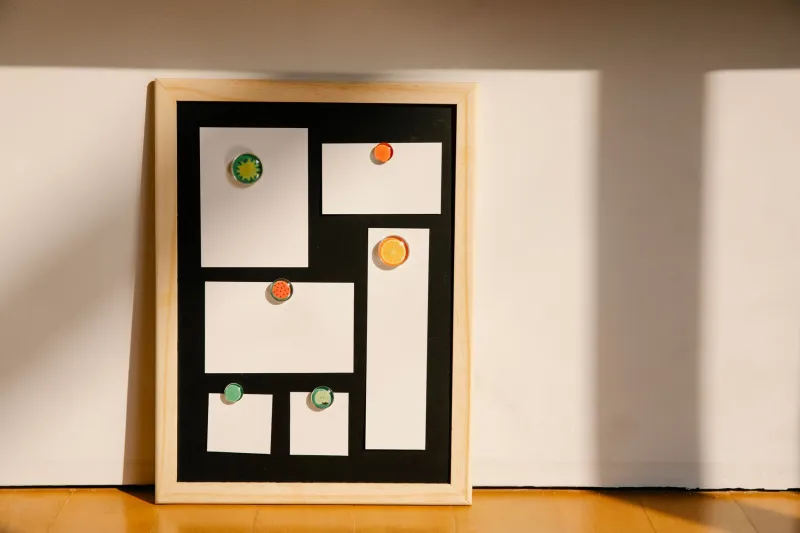
In 2026, the most refreshing social feed in Britain might be behind a coffee machine, pinned slightly crooked and held up by a drawing pin with a bent head. It won’t notify you. It won’t suggest people you may know. It will, however, tell you that someone in the next postcode is teaching life drawing on Thursdays, that a bicycle has gone missing near the park, and that a room in a flatshare comes with “good light, bad boiler, lovely cat”.
This is cork culture: the analogue noticeboard as neighbourhood network. And after years of watching our local feeds turn into algorithmic sludge, a new generation is treating these boards less like background clutter and more like a weekend crawl.
The quiet network
A good noticeboard is a snapshot of a place trying to organise itself. It is also deeply, unfashionably useful. In an era when “community” is often a word used in a council press release, a cork board is proof that people still need each other for small, specific things: a lift to the airport, a bassist, a spare desk, a home for a bag of courgettes.
The appeal isn’t nostalgia, exactly. It’s the low stakes. You don’t need an account. You don’t need a profile picture. You don’t need to perform a personality. You need a card, a pen and the social courage to ask the barista whether you can pin something up. That’s it.
And because the board is physical, it is ruthlessly local. A noticeboard in Bristol’s Stokes Croft speaks to a different ecosystem from one in a library foyer in Leeds or a launderette in Glasgow’s Southside. The information is porous, imperfect and occasionally illegible — but it is not trying to sell you a mattress.
Field guide: boards worth a detour
You don’t need a formal map. The best boards tend to find you. But if you’re making an afternoon of it, start with these four types.
The café cork board
The classic. Look for the board near the toilets, the one with a layer of older notices visible at the edges like geological strata. Café boards are strong on gigs, flats, yoga and lost property. The best ones have a slightly chaotic energy and at least one card that has been there so long it has become part of the decor.
The library pin-up
Less chaotic, more civic. Library boards are where you find adult learning classes, local history talks, book groups and the occasional stern notice about returning your loans. They are also brilliant for people who want to post something without feeling like they’re interrupting a social scene. Neutral ground, good lighting, no pressure to buy a flat white.
The launderette card rack
Underrated. A launderette board is a proper cross-section of local life: odd jobs, childcare, second-hand prams, guitar lessons. The footfall is steady, the dwell time is long, and nobody is in a hurry. If you want to understand a neighbourhood’s practical economy, skip the estate agent window and find the launderette.
The arts-centre staircase board
The cultural noticeboard, usually overloaded with risograph posters and tear-off tabs. Expect life drawing, choir practice, zine fairs and a life-sized photograph of someone’s cat. These boards are often the most visually chaotic and the most rewarding to browse, because they attract people who make things.
The etiquette of the pin
A noticeboard is a shared resource, which means it has rules. Nobody writes them down, which is exactly why they matter.
First, ask. Even if the board looks lawless, check with staff. Some places have a quiet policy about what can go up; others just want you to use the right pins. Second, date your card. An undated notice is a ghost story. Third, use tear-off tabs if you’re advertising an event or service — and make them easy to remove without shredding the whole card. Fourth, don’t pin over someone else’s notice. Layer politely or wait. Fifth, refresh rather than spam. If your card is still there after a month, update it or take it down. The board is not your personal billboard.
And finally: write legibly. A noticeboard is not a place for mystery. If your handwriting looks like a prescription, type it out. The index card is forgiving, but it is not a miracle worker.
Why the index card is having a moment
There is something satisfying about the index card as a format. It is cheap, standardised and pleasingly finite. You can’t add a link. You can’t attach a 40-second video. You have to make your point in a few lines. That constraint is the point.
In 2026, the index card has become a small symbol of analogue intent: a way of saying “this is local, this is temporary, this is for you and not for an audience”. People are buying them in packs, carrying them in tote bags and treating a good pin-up like a tiny act of civic design. It helps that a card costs pennies. It also helps that no one has ever lost an afternoon to an index card.
A crawl, not a scroll
The joy of cork culture is that it turns a normal Saturday into a gentle expedition. Coffee first, then the library board, then the launderette, then whichever arts centre has the most chaotic staircase. You are not shopping. You are not scrolling. You are reading the small print of your own neighbourhood.
And if you find something — a choir, a flat, a lost cat, a life-drawing class — you might even have to talk to someone about it. Terrible, I know. But that’s the thing about the most honest social feed in Britain: it still expects you to show up.